Turn approved sales logged in ShopGiv into a donation to the cause your customer chose — on a model and amount you set, not a fixed monthly ad spend.
ShopGiv turns part of each approved sale logged in it into a public donation to a cause your customers care about. Your giveback is computed from those sales, on a model and amount you choose. Run the math on your own numbers below.


Who it's for
What does a ShopGiv vendor actually get?
Built for owner-operated local businesses — trades, auto, home services, restaurants. Four things come with it: a lower-cost way to win customers, reach across the whole platform (not just one nonprofit's supporters), a ready-made kit to show you give back, and real goodwill with your own customers.
Computed from transactions
Your giveback is computed from approved sales logged in ShopGiv, including sales to customers you already had. On top of the rate you set, you cover the payment processing on your monthly giveback total — so the rate is not your whole cost, and a little less of every dollar you pay is attributed to the cause than the rate alone suggests. Processing costs more on a card than on a bank transfer, and it weighs heaviest when that total is small. A fixed ad subscription or a shared-lead contract bills you a set amount; your giveback is computed from transactions instead.
Whole-platform reach
However you join — through a nonprofit's development director, a peer, or directly — your listing is visible to every shopper on ShopGiv, not just the supporters of whoever introduced you. Whichever cause a customer has picked, they can find and shop with you. One relationship, platform-wide reach.
A public giveback page + branded materials
Your own public giveback page at shopgiv.com/give/vendor/your-shop, with a scannable QR that sends customers to the app and credits their cause. On top of that, we provide branded, print-ready marketing materials — flyer, window decal, countertop sign, social graphics, email signature — customized with your logo and giveback badge, each carrying a trackable source code so every signup is attributed to you.
Community goodwill
Participating is something you can tell your own customers about — a public signal that ties your business to a cause they care about, the same way a shop already competes on coupons and referral credit, except this one tells a story.
The kit we hand you
You don't have to design anything. We provide print-ready, branded materials — a countertop tent card, window decal, flyer, social graphics, and an email signature — each customized with your logo and giveback badge.
Every piece carries a scannable QR and a trackable source code, so a customer who signs up from your counter is credited to you, and their giveback routes to the cause they choose.

Watch how it works
On the base listing: pay only after a customer buys.
The Smarter Way to Market Your Business
What happens to your sales and profit as more of them are attributed to ShopGiv?
Use the calculator below with your own monthly sales and industry. Move the share slider for how many of your sales are attributed to ShopGiv, then set the incrementality dial to the share of those you judge genuinely new — that share is what the calculator counts as new sales, and it is what moves your net profit after your donation. Only genuinely new customers add real profit; the rest just adds donation cost. Every number here is a projection built from your inputs, not a guarantee.
Industry average — adjust to your numbers. Source: PartsTech 2025 State of General Auto Repair Shops (752 shops): modal ARO band $500–749; import/European + top performers $700+
$41,875 / year
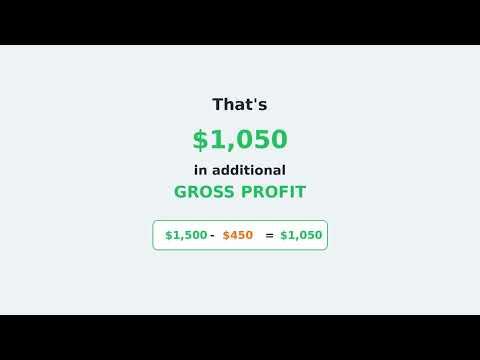
On one customer you attribute to ShopGiv, the giveback is $35 against the $385 gross profit that sale adds.
Projection based on your inputs — not a guarantee.
$385 contribution / gross margin on a $700 sale − $35 giveback. Projection based on your inputs — not a guarantee.
Incrementality = the share of ShopGiv customers who are genuinely new (people you would not have gotten otherwise). It is the model's key assumption — adjust it to your own judgment. Starts at 90% — ShopGiv reaches an audience you haven't — but this is the optimistic end; adjust it to your own judgment.
The share of each ShopGiv customer's purchase you give to their cause.
Modelled here. A per-sale ceiling isn't set on the application — you set it in your dashboard before you publish, by choosing "% per sale, capped per sale".
Your giveback: 5.0% of each sale, up to $40 per sale.
A fixed ad subscription or a shared-lead contract is priced before any job exists. Your giveback is computed from approved sales logged in ShopGiv, on a model and amount you set.
Estimated contribution / gross margin.
Only the new-customer share is new revenue. Projection based on your inputs — not a guarantee.
Projection based on your inputs — not a guarantee.
Without ShopGiv vs. with ShopGiv
A side-by-side of the same month. Projection based on your inputs — not a guarantee.
| Without ShopGiv | With ShopGiv | |
|---|---|---|
| Monthly sales | $100,000 | $109,000 |
| New sales added | — | +$9,000 (new customers only) |
| Donation given | $0 | $500 |
| Net profit / month | $9,000 | $13,435 |
The “new sales added” row counts genuinely-new customers only (90% of your ShopGiv sales) — never every ShopGiv order. Move the incrementality slider to change it.
Safety margin: even if only 10% of these turned out to be genuinely new customers, you'd still break even or better.
What one ShopGiv sale gives back
A ShopGiv customer has already transacted — the purchase comes first, and the giveback is computed from it. A cold ad lead (anchor: Google LSA ~$233 (888-contractor / 126k-lead dataset)) is billed before any job exists.
You pay for a cold ad lead up front whether or not it ever buys. Your ShopGiv giveback is computed from approved sales logged in ShopGiv, at the rate you set. That includes customers you already had.
Your cap protects you on bigger jobs
You give 5.0% of each sale, but never more than $40 on any single job. So the bigger the job, the smaller the bite — your giveback stops growing once a job passes about $800, even as the job keeps climbing.
| Job size | You give | Effective % |
|---|---|---|
| $350 | $18 | 5.0% |
| $700your typical job | $35 | 5.0% |
| $1,400 | $40(capped) | 2.9% |
| $3,500 | $40(capped) | 1.1% |
Projection based on your inputs — not a guarantee.
These inputs estimate what you spend quoting leads that don't buy. They change the “vs traditional advertising” figure only — they do not affect your ShopGiv cost per customer or your profit change.
This projection reflects how ShopGiv is built to work. ShopGiv is pre-launch: these are modeled results, not observed outcomes.
Whether your giveback is tax-deductible, and how to treat it for tax purposes, is a question for your accountant. ShopGiv doesn't say it is deductible.
More ways to run the numbers
Want to go deeper?
The calculator above is the quick version. Two power tools go further — every lever, side-by-side ad-cost comparisons, and a shareable scenario link.
Pro mode: every lever, one shareable link →
All the levers, selectable ad-CAC comparisons, export, and a link you can send to your accountant or partner. Projections, not guarantees.
Recruiter mode: answer the objection →
Introducing ShopGiv to a business? Get the plain-language counter to the common objection, the number that wins, and a line to say.

How does a ShopGiv donation actually work?
You pick how you give back, and you can change or pause it anytime. The application asks you to choose one of two ways to start — Percentage (a flat rate on the sale) or Flat (a fixed fee per transaction). Ceilings — on a single job, or on your monthly total — are set in your dashboard before you publish, not on the application. The donation is computed on the pre-tax amount of an approved sale logged in ShopGiv.
High-ticket job? Cap it. A per-job or per-month cap turns a flat percentage into a falling effective rate as the job grows — for example, a $500 cap at a 1% rate is 1% effective on a $50,000 job, and on a $100,000 job that same $500 cap is just $500 out of $100,000 — half the effective rate, and it keeps shrinking as the job grows. The bigger the job, the smaller the bite.
Where the money goes
90.5% of each donation is attributed to the cause the shopper chose; a 9.5% platform fee funds ShopGiv's operations (AiN Collective). We say 90.5%, never 100% — you should be able to trust every number on this page, including this one.
“My margins are too thin”
Dan runs the math on what a giveback actually costs a shop.
ShopGiv | Margins Deep Dive
Straight answers
My margins are too thin — won't donating eat my profit?
The donation is computed on the pre-tax subtotal of an approved sale logged in ShopGiv — including a sale to a customer you already had — at a rate you set, and you can change it or pause it whenever you want. Your year-end net margin — what's left after overhead and your own pay — and the margin on one more job are two different numbers, because overhead and your own pay don't change when you take that job. Divide the rate you set by your own margin on a job and you have the share of that job's margin the rate consumes. Now the other side of it, plainly: on a sale that would have happened anyway, the donation is a straight deduction from margin you had already earned — it reduces your profit. Whether you come out ahead depends on what share of your ShopGiv customers are genuinely new, and there's no way yet to prove that, so the honest figure is the break-even share — computed from your own rate and your own margin in the calculator above. And the rate you set isn't your whole cost: you also cover the payment processing on your monthly giveback total.
How is my donation actually calculated?
You pick how your giveback is computed — the application starts you with a percentage of the sale or a fixed amount per transaction. Ceilings — on a single job, or on your monthly total — are set in your dashboard before you publish, not on the application. You set your own rate, and your own ceiling if you use one, and the donation is computed on the pre-tax subtotal of any approved sale logged in ShopGiv. On top of the rate you set, you cover the payment processing on your monthly giveback total — so the rate is not your whole cost, and a little less of every dollar you pay is attributed to the cause than the rate alone suggests. Processing costs more on a card than on a bank transfer, and it weighs heaviest when that total is small. You can change your rate or pause the donation anytime.
Is my contribution tax-deductible?
Your giveback is attributed to the cause the shopper chose. Whether your giveback is tax-deductible, and how to treat it for tax purposes, is a question for your accountant. ShopGiv doesn't say it is deductible.
Does ShopGiv actually bring me new customers, or just donate on people who'd have shown up anyway?
Honest answer: there's no way yet to prove a sale was incremental versus a customer who would have come regardless — but you don't need that proof to know the bar you'd have to clear. Take a 5% giveback, a 40% contribution margin and $10,000 a month in approved sales logged in ShopGiv (all three are examples — plug in your own). Counting the payment processing you cover on your monthly giveback total, you come out ahead once more than 13% of your ShopGiv customers are genuinely new (so more than 1 in 7 clears it too). Whether your customers clear that bar is something neither of us can measure yet. Run your own rate and margin in the calculator above: the bar rises as your margin falls, and at some rates and margins it can't be cleared at all.
How does this compare to advertising I already pay for?
A different kind of cost, not a cheaper version of the same one. Lead marketplaces like Angi/HomeAdvisor charge per lead — $15–$85 by Hook Agency's accounting (published May 2025), $25–$120 by Ollyolly's (updated October 2025) — and sell the same lead to several competing shops at once, so you pay whether or not the job ever becomes yours. Google Local Services Ads work out to about $233 per paying customer on the strongest published dataset here (888 contractors, 126,650 leads — Searchlight Digital, 2026). A fixed ad subscription or a shared-lead contract bills you a set amount before any job exists; your giveback is computed from approved sales logged in ShopGiv, at the rate you set. Which is cheaper per customer depends on how many of those sales are genuinely new, and nothing measures that for you yet.
If I sign up through one nonprofit, do I only reach that nonprofit's supporters?
No. However you join — through a nonprofit's development director, a peer, or directly — your listing is visible to every shopper on ShopGiv, across every participating nonprofit, not just the supporters of whoever introduced you. Whichever cause a customer has chosen, they can find and shop with you, and their giveback still routes to their own chosen cause. One relationship gets you platform-wide reach.
I don't have time to set up another thing — how much work is this?
The application takes about 10 minutes. Once your listing is live, the donation is computed automatically on approved sales logged in ShopGiv — you can change your rate or pause anytime.
Won't this just bring me discount-hunters and price-shoppers?
It's aimed at the opposite crowd. ShopGiv shoppers are choosing where to spend based on which business gives back to a cause they care about — not on who's cheapest. There's no coupon or discount in the model; the giveback comes out of your margin, not off the customer's price. Customers who choose you because you give back tend to be less price-driven and more loyal than a deal-chaser — though, like anything on this page, that's how the model is built to work, not a guaranteed outcome we can yet prove.
Is there a fee to join, and how is my giveback paid?
There is no sign-up fee to join ShopGiv until ShopGiv reaches 5,000 shoppers, and a business whose application is submitted before then has its sign-up fee waived permanently. ShopGiv may introduce membership fees after 5,000 shoppers: the waiver covers the sign-up fee, and it is not a promise of free membership. What you pay is your giveback, at the rate you set, on approved sales logged in ShopGiv, including sales to customers you already had. A sale a shopper logs counts toward your giveback once it is approved: you approve or reject each one, and a sale you don't act on may be approved automatically after a review period. You also pay the payment processing on your monthly giveback total. Your giveback is totalled at the end of each month and paid by auto-pay from the card or bank account you connect. ShopGiv's 9.5% share comes out of the giveback, not on top of it, and funds ShopGiv's operations. Optional paid add-ons are extra, and only if you choose them.
Is any of this a guarantee?
No. ShopGiv is early — there's no track record of realized vendor results to show you yet. Every number on this page and in the calculator is a projection built from your own inputs plus published industry benchmarks, clearly cited. 90.5% of each giveback is attributed to the cause the shopper chose, with a 9.5% platform fee funding ShopGiv's operations. Whether your contribution counts as a charitable deduction or a marketing/advertising expense is a question for your accountant, not this page.
When a nonprofit's supporter logs a purchase from you in ShopGiv and it's approved, your giveback on that sale is attributed to the cause they chose — on a model and amount you set, not a fixed monthly ad spend.
The ShopGiv flywheel: nonprofits bring supporters, those supporters shop local businesses, those businesses give back from every sale, and that funding flows back to the nonprofits — a self-reinforcing loop.
Know a business or cause that should be on ShopGiv?
Don't see a cause or business you'd love to shop with on ShopGiv? Invite them — it turns everyday spending into giving.
Your ShopGiv share link
Copy it and share it anywhere.
https://shopgiv.com/joinScan this in person to open ShopGiv